
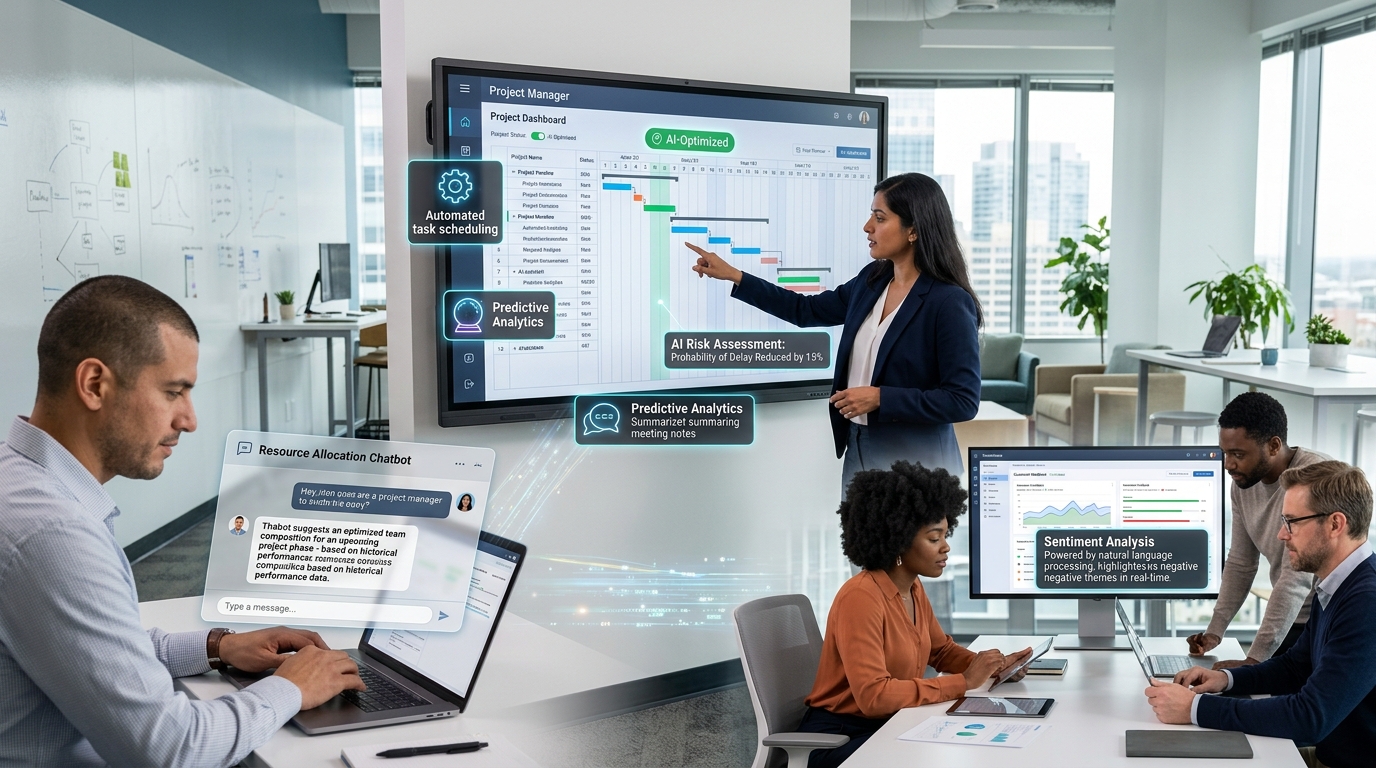
Artificial intelligence is transforming project management. From predictive scheduling to risk analysis, AI can provide insights faster than ever before. But for project managers (PMs), the value of AI lies not in the first answer it gives, it lies in how you interrogate, verify, and refine the responses from AI.
Algorithms work based on historical data, assumptions, and parameters, which means they can miss context, overfit trends, or introduce bias. I believe quite a lot of people found AI may even make stupid mistakes like saying a wrong year we are in. So, PMs who succeed in the AI era are those who combine technological literacy with critical thinking, skepticism, and iterative questioning.
Treat AI Outputs as Hypotheses
Whenever AI provides a recommendation—whether it’s a schedule, a risk assessment, or a resource allocation plan—think of it as a hypothesis, not a final solution. Ask yourself:
- What assumptions underlie this response?
- What data was this based on?
- Are there any scenarios or edge cases it might have missed?
This mindset ensures that AI suggestions are critically assessed rather than blindly implemented.
Ask Follow-Up Questions
Once you receive an AI response, don’t stop there. Ask the question in a different way or probe deeper to see if the result holds up. For example:
- Original question: “Our project is going to start, details are blablabla, what are the risks you could think of?”
- Follow-up questions: “Finance department will be impacted after implementation on recogncilation, any thoughts on risks?”
Iterative questioning uncovers assumptions and potential blind spots, improving the reliability of AI recommendations.
Cross-Check With Human Insight
AI cannot replace human judgment. Always validate AI outputs with your experience, team knowledge, and stakeholder input. For example:
- Compare AI-generated timelines with historical project performance.
- Discuss AI risk predictions with team leads who understand on-the-ground challenges.
- Verify budget projections against current market conditions or procurement realities.
This combination of AI and human insight reduces risk and improves decision quality.
Document and Iterate
Make iterative questioning part of your process: document AI outputs, the follow-up questions you asked, and the final decisions. Over time, this builds organizational knowledge and allows you to refine your queries for better results and efficiency in future.
Challenge AI
When you got insights from AI, challenge by asking more questions. Or, even counter verify with another AI. The process is important that AI may favour your personality to provide responses that you want to hear, while ignoring the actual risks on the direction. Please be careful that at this stage, AI tends to adjust your viewpoint instead of reject you objectively.
Conclusion and Final Words
In the era of AI, PMs are not just schedulers or coordinators, we are curators of insights. The most successful PMs:
- Treat AI as a collaborative tool, not a decision-maker.
- Ask the right follow-up questions to test assumptions.
- Validate outputs with human expertise and context.
- Use iterative questioning to refine plans and reduce risk.
By combining AI speed with human discernment, PMs can make better decisions, manage complexity, and deliver projects that truly meet business objectives. And finally, consider the feel of your team members where AI could never do it for you!